

Shaping the future of AI policy for youth well-being
We are honored to welcome you to Jesus College at the University of Cambridge for an invitation-only workshop, Shaping the Future of AI Policy for Youth Wellbeing.
Co-organized by the Noēsis Collaborative and the Leverhulme Centre for the Future of Intelligence at the University of Cambridge, this gathering brings together leading voices from technology, policy, research, philanthropy, and civil society across the UK, US, and EU.
Throughout the day, participants will engage in collaborative workshops, thoughtful dialogue, and shared experiences. Together, we will examine the role of AI in the lives of young people and chart a path forward to safeguard mental health, strengthen human connection, and align on policy frameworks for what’s next.
This convening marks an important step: building a common agenda to close research gaps, advance shared priorities, and establish a transatlantic advisory group to inform the future of AI policy for youth.
Event Details
Program:
Tuesday, October 14, 2025
Main Workshop Runs:
9:00am-5:00pm
Public Salon: Designing AI for Youth Flourishing: From Research to Policy
5:30pm-6:30pm
Dinner & Reception:
6:45 PM
Please register here if attending
Location:
Jesus College, University of Cambridge
The Prioress Room, Elena Hall, Webb Library
Cambridge CB5 8BL,
United Kingdom (Google Maps)
Event Highlights:
The program will feature collaborative sessions and discussions, exploring how we can better design AI policy for youth wellbeing. We will start with breakfast and end with dinner. We understand it’s a large investment of your time and people will be coming from all over the globe. The quality and impact of the event will be worth it.
8:30 AM – 9:00 AM
Coffee, Tea & Light Breakfast + Check-In at the Prioress Room
9:00 AM – 9:30 AM
Purpose, Outcomes & Agenda at Elena Hall
9:30 AM – 10:30 AM
Youth & Public Perspectives on Gen AI
10:30 AM – 11:30 AM
Mapping Benefits, Risks, & Harms
11:30 AM – 11:45 AM
Coffee & Tea Break
11:45 AM – 12:15 AM
Deeper risks of Gen AI impact on Youth Development
12:15 AM – 1:30 PM
Design Paradigm for Youth Flourishing
1:30 PM – 2:00 PM
Lunch & Connecting
2:00 PM – 3:00 PM
Design Principles for Gen AI & Youth
3:00 PM – 4:00 PM
Policy Framework for Gen AI & Youth
4:00 PM – 4:15 PM
Coffee & Tea Break
4:15 PM – 5:15 PM
Toward Action: Research, Policy & Standards
5:30 PM – 6:30 PM:
Public Fireside Chat: Designing AI for Youth Flourishing: From Research to Policy.
6:45 PM – 7:15 PM:
Reception at the Marshall Green
7:15 PM – 9:00 PM:
Seated Dinner in the historic Upper Hall of Jesus College. Learn more and register
Please note, panels and group discussions throughout the day will be held under Chatham House Rules.
Attending Guests Will:
Help Shape the Future of Policy:
Play a direct role in setting the agenda for how AI is governed in the lives of young people. Contribute to frameworks, safeguards, and policy proposals that can guide decision-making across the US, UK, and EU.
Work Alongside Leading Voices:
Engage with policymakers, researchers, technologists, funders, and civil society leaders from both sides of the Atlantic. The diversity in the room, across sectors and countries, makes this a rare opportunity to align perspectives.
Advance Research and Close Gaps:
Be part of shaping a strategic research agenda on Social AI and youth development, helping to close critical data gaps and inform smarter, evidence-based policy.
Travel and Directions
By Rail
A regular train service runs to Cambridge from London’s Kings Cross Station, London Liverpool Street Station, and many other mainline UK stations. The College is located approximately 2miles (3.2 kilometres) from the railway station. Buses run about every 10 minutes and there is a taxi rank outside the station. Taxis cost around £10. For planning a train journey to Jesus College, see National Rail.
By Air
The nearest airport is Stansted (c 32 miles / 51km). Heathrow is approximately 71 miles / 114km away, and Gatwick 96 miles / 154km.
There are regular train services between Cambridge and Stansted. National Express operates bus services between Cambridge and all three airports mentioned above.
By Bus or Coach
The Drummer Street bus station is within walking distance of the College, approximately 500m away. For information about coach services to Cambridge please see the National Express or Stagecoach websites.
Hotels Close By:
Since Jesus College is located in the centre of Cambridge, there are several nearby hotels that are both comfortable and convenient:
For more details about Cambridge itself please see the Visit Cambridge website.
Organizers & Sponsors
Co-hosts:
HumanConnections.AI, an initiative of Noēsis Collaborative and the University of Cambridge: Leverhulme Centre for the Future of Intelligence
Featured Partners:
IEEE, Harvard Human Flourishing Program, London School of Economics, USC McNeely Center for Ethical Leadership, Young People’s Alliance
Title Sponsors:
Einhorn Collaborative, Omidyar Network and The Risman Foundation
Featured Speakers & Participants
-

Maria Axente
Founder & CEO, Responsible Intelligence
-

Dean Ball
Senior Fellow, The Foundation for American Innovation
-

Andrew Briggs
Emeritus Professor of Nanomaterials, University of Oxford and Executive Chair, QuantrolOx
-

Andy Burrows
CEO, Molly Rose Foundation
-

Ian Marcus Corbin
Founding Director, The Public Culture Project, Harvard University
-

John Ehrett
Chief of Staff and Attorney Advisor, U.S. Federal Trade Commission
-

Amina Fazlullah
Head of Tech Policy Advocacy, Common Sense Media
-

Thao Ha
Associate Professor and Director of the @HEART Lab, Arizona State University
-

John Havens
Executive Director, The IEEE Global Initiative for Ethical Considerations in Artificial Intelligence and Autonomous Systems
-
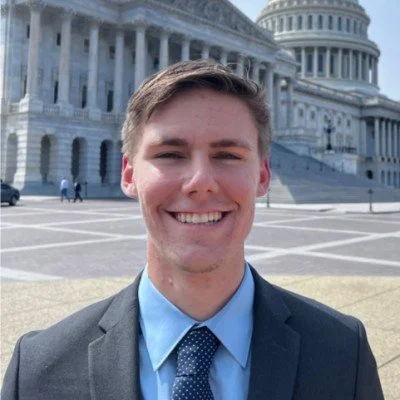
Sam Hiner
Executive Director & Co-Founder, Young People’s Alliance
-

Julianne Holt-Lunstad
Professor of Psychology and Neuroscience and Director of the Social Connection & Health Lab, Brigham Young University
-

David Hsu
Senior Director of Programs, Omidyar Network
-

Ron Ivey
Founder and CEO, Noēsis Collaborative
-

Ravi Iyer
Managing Director, Neely Center for Ethical Leadership and Decision Making
Managing Director, Psychology of Technology Institute -

Will Jones
Futures Program Associate, Future of Life Institute
-

Konstantinos Karachalios
Managing Director, IEEE Standards Association
-

Martijn Lampert
Co-Founder and Research Director, Glocalities
-

Brad Littlejohn
Director of Programs and Education, American Compass
-

Sonia Livingstone
Professor, Department of Media and Communications, London School of Economics
-

Kim Malfacini
Product Policy Lead, OpenAI
-

Amanda McCroskery
Applied AI Ethics and Governance Researcher, Google DeepMind
-

Katie McNerney
Senior Advisor, Noēsis Collaborative
-

Andrew McStay
Director, The Emotional AI Lab and Professor of Technology and Society, Bangor University
-

Amy Orben
Programme Leader Track Scientist at the MRC Cognition and Brain Sciences Unit, University of Cambridge
-

Dorian Peters
Assistant Professor, Institute for Technology and Humanity and Senior Research Associate,
Intellectual Forum, Jesus College, University of Cambridge -

Giada Pistilli
Principle Ethicist, Hugging Face
-

Henry Shevlin
Associate Director, Leverhulme Centre for the Future of Intelligence (CFI) and Programme Co-Director, Kinds of Intelligence
-

Jennifer Tacheff
Founder, Manifest and Senior Advisor, Noēsis Collaborative and HumanConnections.AI
-

Felicity Tan
Founding Executive Director, The Risman Foundation
-

Terri Taylor
Strategy Director for Innovation & Discovery, Lumina Foundation
-
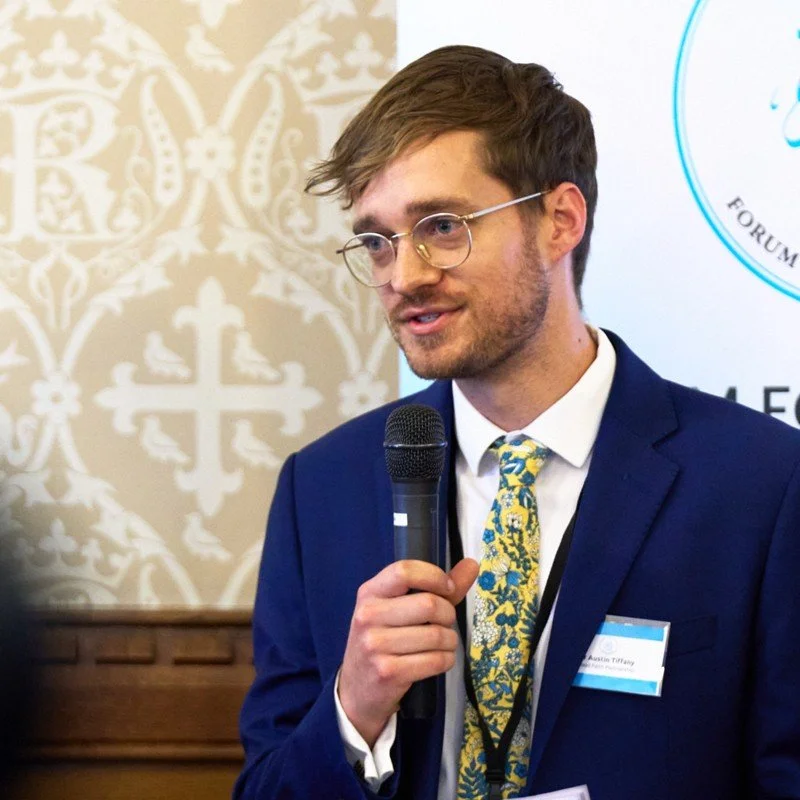
Austin Tiffany
Senior Director, Good Faith Partnership, AI Faith & Civil Society Commission
-

Angy Watson
Chief People and Tranformation Officer, Paymentology

Recommended Reading
Designing AI to Help Children Flourish
Current AI governance frameworks often overlook the developmental needs and rights of children, failing to ensure that AI technologies foster human flourishing rather than cause harm. This brief for the G20 argues that AI companies have both an opportunity and a responsibility to prioritize child well-being by designing chatbots that enhance, rather than replace, human relationships. The principles and recommendations of this brief will form the foundation of the workshop design.
Social AI and Human Connections: Benefits, Risks and Social Impact
Drawing on a review of recent literature, expert interviews, a Salon with leading technologists and scholars, and webinars with Social AI researchers, the paper explores the question: How might we design AI systems for social connectedness and human flourishing? This whitepaper provides a framework for how to think about the human choices in the design, governance, and use of AI systems and how those choices impact our social and emotional capabilities.
Ethics at the Frontier of Human-AI Relationships
The prospect of humans forming ongoing relationships with AI, across social, professional, and even romantic contexts, has long been imagined. Recent advances in machine learning and natural language processing, however, have brought this possibility into widespread practice. Platforms such as Replika, Xiaoice, and CharacterAI now engage millions of active users in emotionally complex exchanges. This paper traces these developments, offering historical and technical context, a framework for classifying human–AI relationships, and an analysis of their ethical stakes and social impacts. It concludes by noting instructive parallels between the rise of Social AI and the trajectory of social media.
The anthropomimetic turn in contemporary AI
This paper identifies an anthropomimetic turn in AI: the deliberate design of systems with humanlike features. Unlike anthropomorphism, which arises from human perception, anthropomimesis is embedded in the architecture of contemporary Large Language Models such as ChatGPT, which convincingly mirror human conversation and cognition. The paper highlights potential benefits, including accessibility, educational and healthcare applications, and companionship, while also addressing risks such as manipulation, impersonation, alignment challenges, and questions of authenticity. It concludes by calling for interdisciplinary research and regulatory frameworks to guide the development of anthropomimetic AI.